
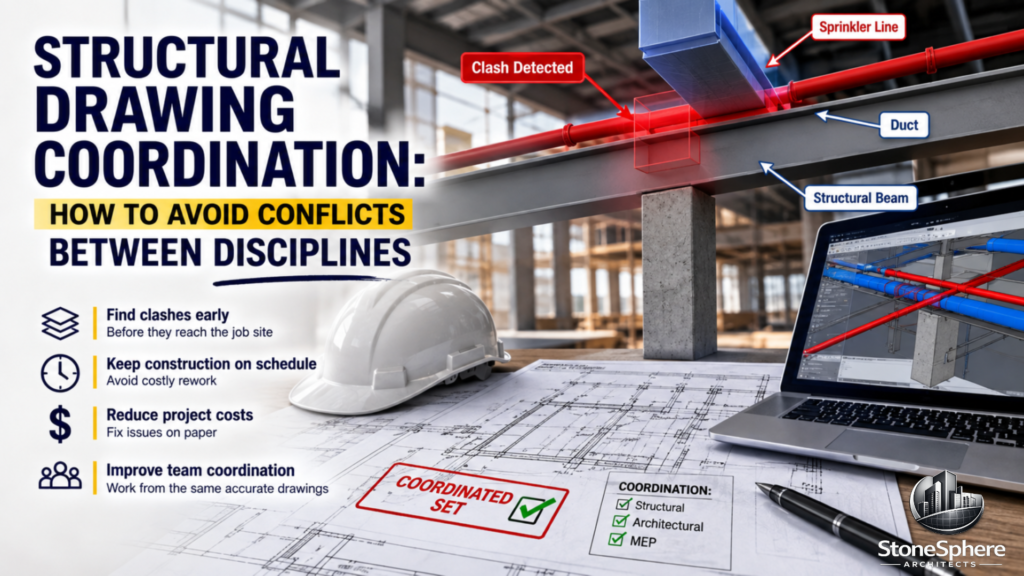
A structural beam sits exactly where a duct was supposed to run. A column lands in the middle of a doorway. A sprinkler line and a steel connection fight for the same six inches of ceiling space. These clashes are not rare accidents; they happen whenever architectural, structural, and MEP teams design in isolation instead of checking their work against each other. The result is field rework, change orders, and a schedule that quietly slips week after week. The solution is structural drawing coordination: a deliberate process of aligning structural sheets with every other discipline before construction begins, so conflicts are caught on paper instead of on site. Done well, it saves time, protects budgets, and keeps every trade building from the same accurate picture. Keep reading to see exactly how it works and how to do it right.
Why Structural Drawing Coordination Matters
Every building involves multiple disciplines working in the same physical space at the same time. Architects plan layouts, structural engineers design the frame, and MEP teams route ducts, pipes, and conduit through that same frame.
Without proper coordination, each set of drawings can be perfectly correct on its own and still conflict badly with another. A structural set can meet every code requirement while a duct runs straight through a beam it was never checked against.
Structural drawing coordination closes that gap. It forces every discipline to compare notes before drawings are finalized, so the physical space is accounted for once instead of fought over during construction.
Read Also: Structural vs MEP Drawings: What Contractors Need to Know
This becomes especially important on projects with tight floor-to-floor heights or dense mechanical zones, where even a small oversight can force major rework later.
Common Causes of Discipline Conflicts
Most clashes trace back to a handful of recurring issues. Recognizing them makes it easier to prevent them during the coordination process.
- Isolated design work: Each discipline develops drawings independently, without regularly checking them against other trades.
- Late-stage reviews: Coordination happens only near the end of design, leaving little room to fix major conflicts.
- Outdated drawing revisions: One team works from an older version of the structural drawings while another has already updated theirs.
- Congested spaces: Ceiling plenums, mechanical rooms, and shafts force structural, mechanical, and electrical elements into the same tight area.
- Missing communication: Design changes made by one discipline are never shared with the others in time.
Each of these issues turns a manageable design decision into a costly field problem later on.
How to Improve Structural Drawing Coordination
Strong coordination is a process, not a single meeting. These steps help teams catch conflicts early and keep every discipline aligned.
- Start coordination early. Bring structural, architectural, and MEP teams together during design development, not after drawings are considered final.
- Use a shared digital model. Federated BIM models let every discipline view structural elements alongside mechanical and electrical systems in one place.
- Run regular clash detection. Automated clash-detection tools flag overlaps between structural drawings and other systems before anyone reaches the field.
- Hold consistent coordination meetings. Weekly or milestone-based check-ins keep every team working from the same current information.
- Track and resolve issues formally. Log every clash, assign an owner, and confirm the fix is reflected in updated structural drawings before moving forward.
When these habits become routine, the coordination process shifts from a reactive fix to a built-in part of the design workflow.
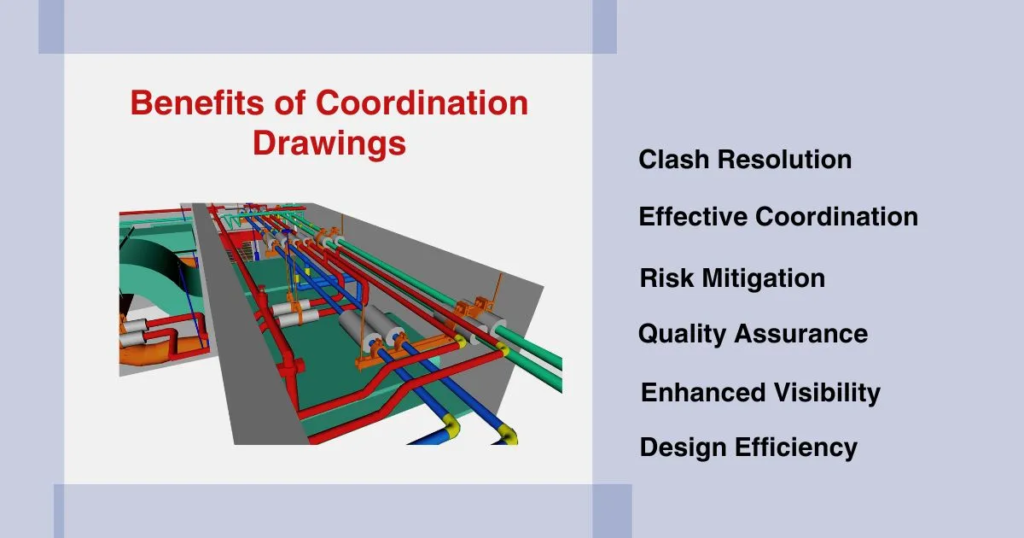
image by enginero.com
Benefits of Getting Structural Drawing Coordination Right
Investing in coordination early pays off throughout the entire project. The benefits go well beyond avoiding a single clash.
- Fewer RFIs and change orders: Conflicts resolved on paper never reach the field as questions or costly modifications.
- Faster construction schedules: Crews build without stopping to wait on clarifications or rework damaged elements.
- Lower overall costs: Fixing a conflict in a drawing is far cheaper than fixing it after concrete has been poured or steel installed.
- Stronger team collaboration: Regular coordination builds trust and communication between architects, engineers, and contractors.
- Better final quality: A building assembled from properly aligned drawings performs and looks the way it was originally intended.
These outcomes make coordinating structural drawings early one of the most valuable steps a project team can prioritize, regardless of project size or complexity.
Best Practices to Keep Coordination on Track
A few ongoing habits keep the coordination effort effective throughout every phase of a project, not just at the start.
- Assign clear ownership. Designate a coordinator responsible for tracking conflicts and confirming resolutions across all disciplines.
- Keep documentation current. Update structural drawings immediately after any approved change so no team works from outdated information.
- Review at every milestone. Check coordination at each design phase rather than waiting until drawings are nearly complete.
- Document every decision. Keep a written record of how each conflict was resolved for future reference and accountability.
Final Thoughts
Conflicts between disciplines are one of the most preventable problems in construction, yet they remain one of the most common. Strong structural drawing coordination closes the gap between disciplines before it ever reaches the job site.
By coordinating early, communicating consistently, and reviewing drawings at every stage, project teams can avoid costly clashes and keep construction moving smoothly from design through completion. A little extra effort during design almost always costs far less than fixing the same problem once crews are already on site.